
Homeowners: Do These 3 AC Checks Before You Call a Technician
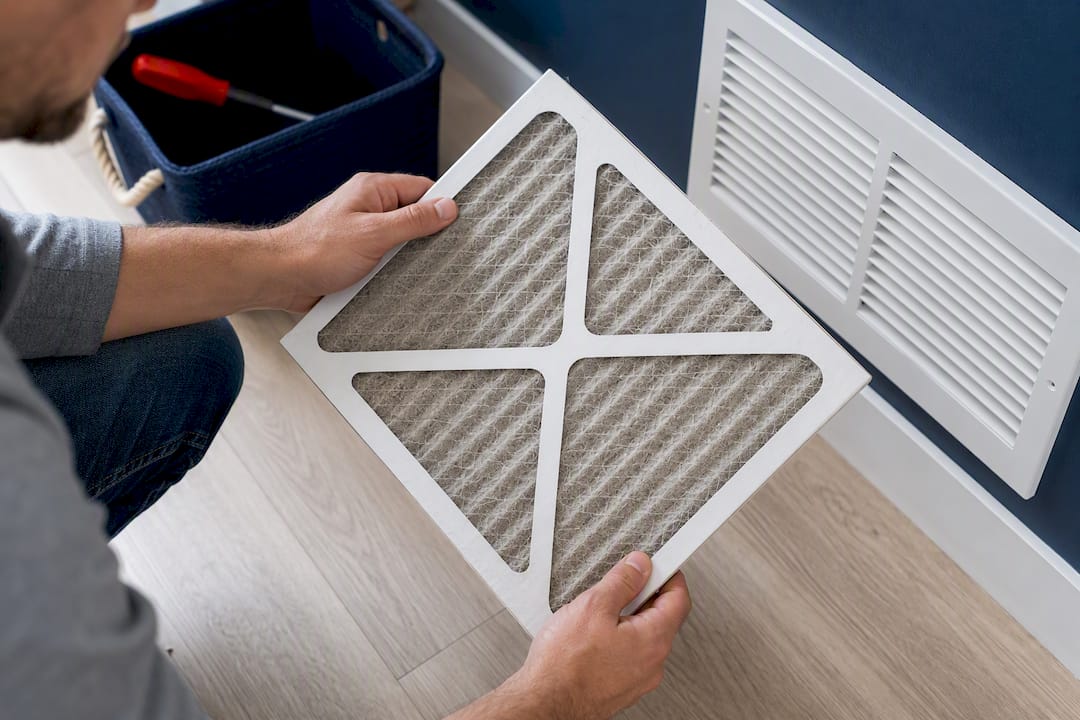
A constantly running AC isn’t automatically broken. Some systems, especially newer variable-capacity units, run long stretches by design to control humidity. But if your house never gets to the temperature you set, something’s wrong. Start with three checks: flip the thermostat fan to AUTO, pull the filter and hold it to a light to see if you can see through it, and confirm the thermostat is set to COOL at a realistic temperature. If you see ice on the lines, smell burning, or the breaker keeps tripping, shut the system down and call a technician.
TL;DR:
- Properly sized and modern variable-capacity units can run long hours by design to manage humidity, but never reaching the set temperature indicates a problem.
- Common causes include dirty filters, blocked outdoor coils, refrigerant leaks, frozen coils, electrical failures, and duct leaks, all requiring progressive troubleshooting.
- Always check thermostat settings, filter condition, outdoor clearance, and vent openness first, as these are quick, low-cost fixes.
- Signs of more serious issues involve ice buildup, burning smells, repeated breaker trips, or persistent warmth, which require professional diagnosis.
- Routine maintenance and early inspection of airflow, refrigerant pressure, and electrical wiring can prevent small problems from causing costly system failures.
Table of Contents
- What Causes an AC to Run Constantly?
- How Do You Safely Troubleshoot an AC That Won’t Shut Off?
- When Should You Call a Professional for a Constantly Running AC?
- How Ricotta Heating & Air Diagnoses a System That Won’t Cycle Off
- Get Your AC Diagnosed Before Small Problems Become Big Repairs
- Why “Just Let It Run” Is Bad Advice
- Sources
What Causes an AC to Run Constantly?
Before you assume the worst, know this: a properly sized system, especially one with a variable-capacity compressor, can run for long periods by design to manage humidity and comfort. Long runtime alone doesn’t prove failure. The real red flag is a house that never reaches setpoint no matter how long the unit runs.
Thermostat settings and placement. Check whether the fan is set to ON (runs constantly, whether or not the compressor is cooling) versus AUTO (runs only when cooling). Also look at where the thermostat sits. One mounted near a sunny window, a lamp, or a kitchen doorway reads the room as hotter than it is and keeps calling for cooling long after the rest of the house is comfortable. A miscalibrated sensor causes the same problem even in a well-placed thermostat.
Dirty air filters. A clogged filter is like breathing through a pillow. Restricted airflow forces the system to work harder and run longer, and it’s the most common, most fixable cause of both long runtimes and frozen coils. Check it monthly during peak season; replace standard filters every 60 to 90 days.
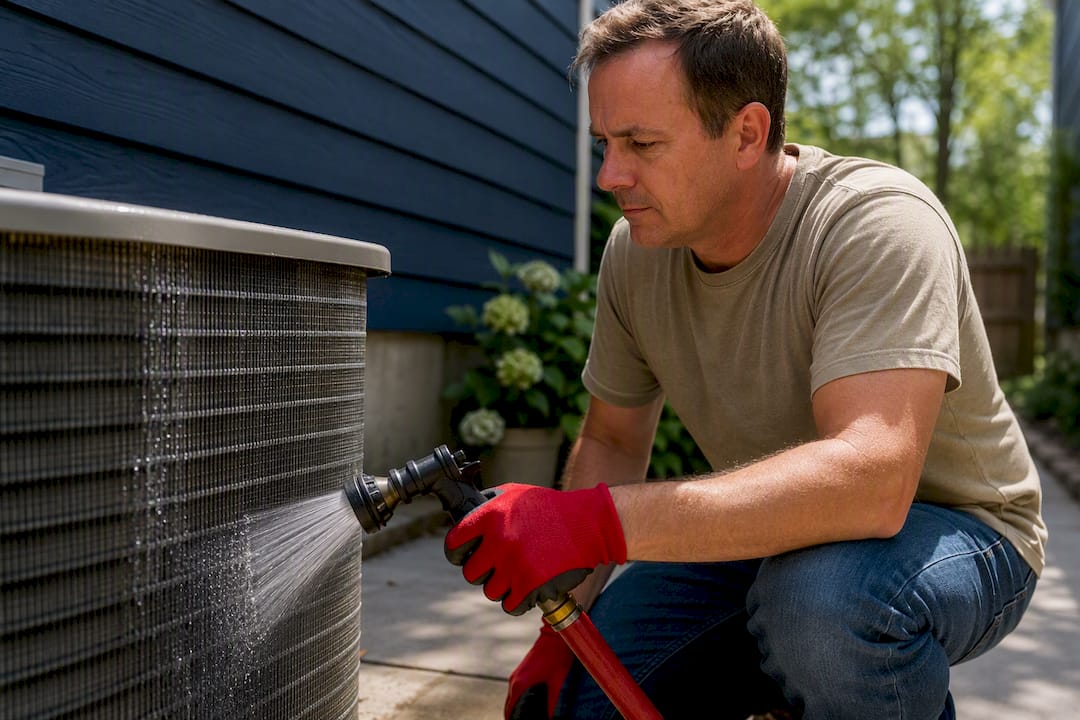
Outdoor condenser and coil blockages. Walk outside and look at the condenser unit. Grass clippings, cottonwood fluff, leaves, and dirt on the coil fins block airflow the same way a dirty filter does. Keep at least 18 to 24 inches of clearance around the unit and rinse the fins gently with a garden hose. Never use a pressure washer. It bends the fins and makes airflow worse.
Low refrigerant or a leak. Warm air from the vents, a hissing sound near the lines, or ice forming on the copper refrigerant line are classic signs. This is not a DIY fix. EPA-certified technicians are legally required to handle refrigerant, and DIY refill kits and sealers often make leaks worse instead of fixing them.
Frozen evaporator coil. Ice buildup usually traces back to restricted airflow or low refrigerant. Running a frozen system nonstop accelerates compressor wear.
Electrical control failures. If the outdoor unit runs even when the thermostat is completely off, suspect a stuck or welded contactor or shorted low-voltage wiring. Buzzing from the outdoor unit is another warning sign. This is strictly a technician’s job. Poking around a live electrical contactor isn’t worth the risk.
Ductwork and vents. Closed vents in unused rooms, or duct leaks dumping cooled air into the attic or crawlspace, force the system to run longer to compensate. Walk the house and open every supply vent; a room with the vent shut sends cooling nowhere.
System sizing and age. A correctly sized system running long during a heat wave is normal. An undersized or aging system that runs nonstop and still can’t keep the house cool is a different story entirely, and it usually points to a capacity problem that a filter change won’t solve.
Aging or failing compressor. A compressor nearing the end of its life struggles to build pressure and runs longer to compensate, which only speeds up its own failure. Continuous, ineffective runtime is one of the clearer signs a compressor is on its way out.
Work through these in order of risk: thermostat and filter first, then outdoor unit clearance and vents, then call a pro for refrigerant, electrical, or compressor concerns.
Pro Tip: Technicians typically check airflow and thermostat settings before anything else because those fixes are fast, free, and solve the problem more often than people expect.
How Do You Safely Troubleshoot an AC That Won’t Shut Off?
- Switch the thermostat fan to AUTO and set the mode to COOL with a realistic temperature, like 74 to 76 degrees.
- Pull the filter and inspect it. If it’s gray, matted, or you can’t see light through it, replace it before doing anything else.
- Check the outdoor unit for leaves, mulch, or debris packed against the coil, and clear at least 18 inches around it.
- Walk the house and open every vent, especially in rooms you keep closed off.
- Check the breaker panel for a tripped breaker related to the HVAC system.
- If you see ice on the coil or refrigerant lines, turn off the thermostat completely (switch to OFF) and switch the fan to ON to blow air across the coil and thaw it. Do not run the compressor while ice is present.
- If ice, burning smells, or repeated breaker trips continue, leave the system off and call a technician rather than restarting it repeatedly.
Before you call, jot down: the thermostat’s mode and setting, whether the outdoor fan and compressor were running, any hissing or buzzing sounds, visible ice, whether the breaker tripped, and roughly how long the unit has been running nonstop. That handful of details often cuts diagnostic time in half.
When Should You Call a Professional for a Constantly Running AC?
Some signs mean stop troubleshooting and pick up the phone. Ice on the refrigerant lines, a burning smell, a breaker that trips more than once, or a house that stays warm no matter how long the system runs all point to something beyond a filter swap.

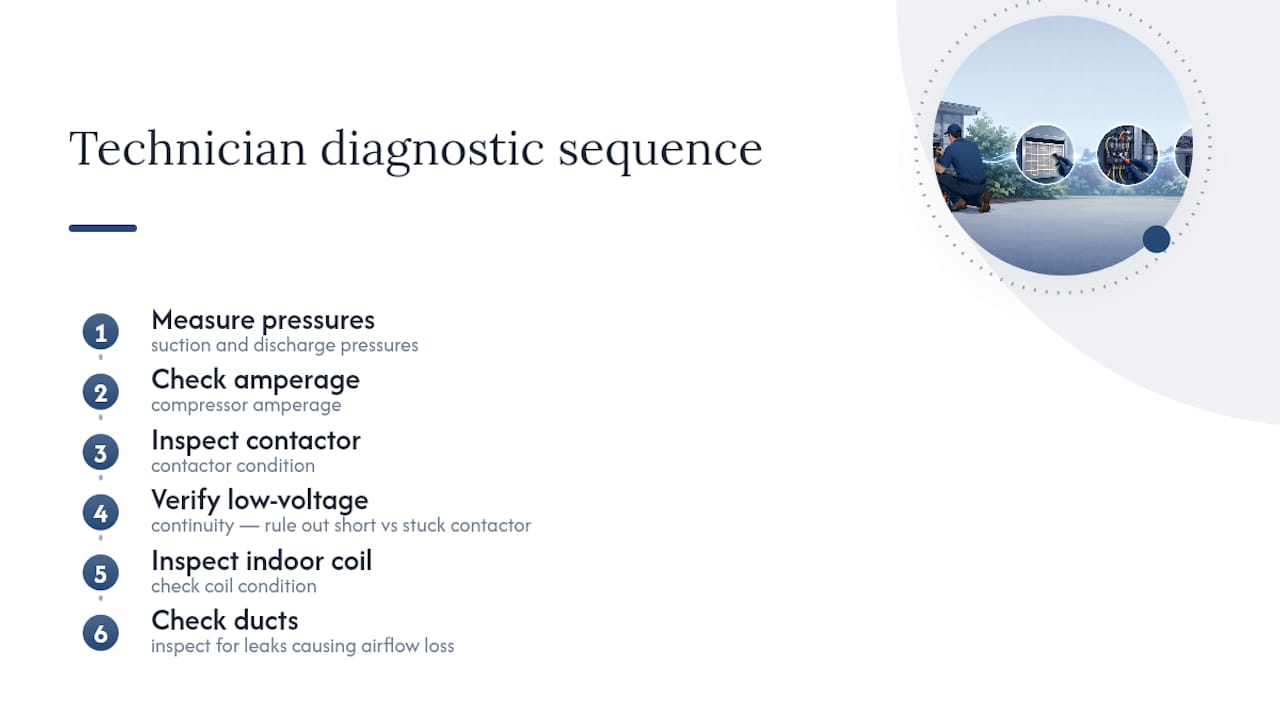
On arrival, a technician typically checks suction and discharge pressures, compressor amperage, and contactor condition, then verifies low voltage continuity to rule out a shorted wire versus a stuck contactor. They’ll inspect the indoor coil and check for duct leaks that might explain why cooled air never reaches the rooms that need it.
Repair versus replacement comes down to a few honest questions: How old is the unit? Has the compressor shown prior issues? Is this a repeat refrigerant leak or a first-time event? A 6 year old system with a failed capacitor is worth fixing. A 16 year old unit with a failing compressor and a history of leaks usually isn’t. Routine maintenance catches most of these issues before they force an emergency decision.
How Ricotta Heating & Air Diagnoses a System That Won’t Cycle Off
Ricotta Heating & Air has spent 50 years working on furnaces and AC systems across St. Louis and Jefferson County, and that field time shapes how we approach a unit that won’t shut off. We start with the safe, low-cost checks: thermostat settings, filter condition, airflow at the vents. Then we move to electrical testing, refrigerant pressure readings, and a look at the ductwork if the easy fixes don’t explain the problem.
…
Our 150+ five-star Google reviews reflect a simple approach: honest diagnostics, no pressure to buy more than you need, and a clear recommendation on repair versus replacement when a system is genuinely at the end of its life.
Get Your AC Diagnosed Before Small Problems Become Big Repairs
Ricotta Heating & Air gives you something a lot of shops don’t: a technician who checks the cheap, easy causes first instead of jumping straight to a sales pitch for a new system.

If you’ve already run through the thermostat, filter, and outdoor unit checks and the system still won’t cycle off, it’s time for a real diagnostic. We handle AC and furnace repair diagnostics across St. Louis County and Jefferson County, including thermostat repair and replacement when a miscalibrated sensor is quietly running your bill up. During heat waves, priority goes to no cooling calls and safety issues like tripped breakers or ice on the lines, and every visit comes with a transparent estimate before any work starts.
If your system is older and this isn’t its first issue, ask about our HVAC maintenance plans, which catch restricted airflow and failing components before they turn into a nonstop runtime problem. Run through the checklist above, jot down what you find, and give us a call. We’ll take it from there.
Why “Just Let It Run” Is Bad Advice
Most advice about a constantly running AC either overcorrects toward panic or undersells the risk entirely. The truth sits in the middle, and homeowners rarely hear it stated plainly: runtime is a symptom, not a diagnosis. The same nonstop compressor cycle can mean your system is doing exactly what a well-designed variable-capacity unit should do on a 98 degree day, or it can mean a contactor is welded shut and quietly running up your electric bill while doing nothing for your comfort.
What gets underestimated is how much the fix depends on sequence, not just cause. A homeowner who calls a technician before checking the filter wastes a service call on a $15 fix. A homeowner who keeps resetting a tripped breaker to “see if it holds” risks the compressor and the wiring both. The order you check things in matters as much as knowing what to check.
I’d also push back on the instinct to blame the thermostat first. In my read of how these calls usually go, airflow problems, filters and blocked coils outnumber thermostat issues by a wide margin. Start there, not with the smart thermostat app.
— Alan
Sources
- Is it bad when the air conditioner runs a lot? - GreenBuildingAdvisor
- Air Conditioner Troubleshooting: Why Your AC Is Not Cooling - Trane
- Air Conditioner Running Turned Off: How to Fix It 2026 - PropelRC