
Why Is My Air Conditioner Freezing Up in Oakville, MO? 6 Common Causes
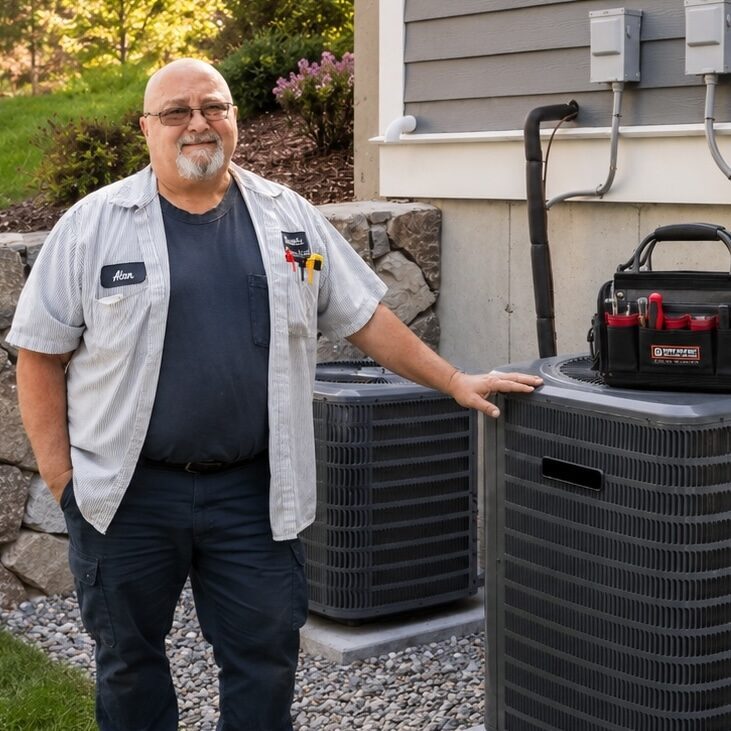
It’s another sweltering 95-degree day in Oakville, and the last thing you expect to see on your air conditioner is a thick layer of ice. It seems impossible, right? An AC unit encased in frost is a sure sign that something is wrong with your system, and ignoring it can lead to bigger, more expensive problems. When your ac freezing up in Oakville MO interrupts your summer comfort, it's usually due to one of a few common issues. At Ricotta Heating & Air, we've seen it all. Let's walk through the most likely culprits so you know what to look for and when to call a pro.
1. Restricted Airflow from a Dirty Filter
This is, by far, the most common reason we see for a frozen AC in St. Louis County. It's also the easiest one for you to check. Your air conditioner works by pulling warm, humid air from your home across a cold evaporator coil. The refrigerant inside the coil absorbs the heat, and the blower motor pushes the newly cooled air back into your house.
For this to work, there needs to be a constant, strong flow of air. When your air filter gets clogged with dust, pet dander, and Missouri's infamous pollen, it's like trying to breathe through a pillow. Air can't get through.
Without enough warm air moving across it, the evaporator coil's temperature plummets below freezing. The condensation that normally forms on the coil and drips away will freeze into a solid block of ice.
What to do before you call:
- Turn off your AC system at the thermostat. This is crucial to let the unit thaw. Don't just turn the temperature up; switch it to "Off."
- Locate and check your air filter. It's usually in a slot on your indoor furnace or air handler.
- If it's visibly dirty, replace it. A good rule of thumb in our area is to check it monthly and replace it at least every 90 days, or more often if you have pets or allergies.
A clean filter is the cheapest insurance for your HVAC system. If you've replaced the filter and the unit still freezes after thawing, it's time to look at other causes.
2. Low Refrigerant Levels (Freon Leak)
Many homeowners think that air conditioners "use up" refrigerant like a car uses gas. That's a myth. Your AC's refrigerant system is a closed loop. If the level is low, it means you have a leak somewhere.
Here’s how a leak causes freezing. Refrigerant is under high pressure. As it flows into the low-pressure evaporator coil, it expands and gets extremely cold. A leak causes the pressure in the system to drop lower than it should be. This drop in pressure makes the evaporator coil even colder than its design temperature, causing it to fall below 32°F and freeze the condensation on its surface.
You might notice other signs along with the ice, like:
- Hissing or bubbling noises near the AC unit.
- The AC runs constantly but doesn't cool your home well.
- Your energy bills have suddenly gone up.
Important Safety Note: Handling refrigerant requires special certification. It is not a DIY job. Simply adding more refrigerant without fixing the leak is not a solution—it's environmentally irresponsible and just kicks the can down the road. Many older homes in the Oakville area still have systems using R-22 refrigerant, which is being phased out and is very expensive. A certified technician from Ricotta Heating & Air can perform a leak test, repair the source of the leak, and then recharge the system to the manufacturer's exact specifications. This is a key part of proper air conditioning repair.
3. A Grimy Evaporator Coil Can Cause Your AC Freezing Up in Oakville MO
Even if your filter is clean, the evaporator coil itself can become dirty over time. Think about all the air that has passed over it for years. Dust, dirt, and other airborne particles that sneak past the filter can build up a thick, grimy layer on the coil's fins.
This layer of grime acts like an insulator, preventing the coil from absorbing heat from your home's air. Just like with a clogged filter, the result is the same: the coil gets too cold, and any moisture on it freezes solid. The high humidity we experience during Oakville summers can accelerate this process, as the constantly wet coil is a magnet for dust and can even lead to microbial growth.
Cleaning an evaporator coil is a delicate process. The metal fins are thin and easily bent or damaged, which would further restrict airflow. It also often requires specialized cleaning solutions and tools to do the job without damaging the coil or surrounding components. If you suspect a dirty coil is your issue, especially if you've been good about changing filters, it’s best to have a professional handle the deep cleaning.
4. Condensate Drain Line Blockage
As your AC removes humidity from the air—a huge job during a typical Missouri summer—that water has to go somewhere. It drips from the evaporator coil into a drain pan and then flows out of your home through a condensate drain line (usually a white PVC pipe).
Over time, this drain line can become clogged with algae, sludge, mold, and sediment. The hard water common in many parts of St. Louis County can also contribute to mineral buildup inside the pipe.
When the line is clogged, the water has nowhere to go. It backs up in the drain pan. If the pan fills up, it can trigger a float switch that shuts down your AC to prevent water damage. If there's no float switch or it fails, the water can spill over and, more relevant to our topic, excess water in the pan area can come into contact with the freezing cold components and turn to ice, contributing to the freeze-up. A severe backup can freeze right back up into the coil. You can sometimes clear minor clogs near the end of the drain line yourself, but for blockages deep within the system, you'll need a pro.
5. Malfunctioning Blower Motor or Fan
The blower motor is the powerful fan inside your indoor air handler or furnace that's responsible for circulating air throughout your home. If this motor fails, runs too slow, or has a faulty capacitor, you're back to the same core problem: not enough air moving across the evaporator coil.
Without that airflow, heat doesn't get transferred to the coil, and it quickly freezes over. You might notice the outdoor unit is running, but you feel very little or no air coming from your vents. You might also hear unusual noises from your furnace or air handler, like screeching (bad bearings) or humming (a failing capacitor).
Similarly, the fan on your outdoor condenser unit has a critical job: to release the heat that was absorbed from inside your house. If that outdoor fan motor is broken, the refrigerant can't release its heat properly. This can cause system pressures to go haywire, which can, in some cases, also contribute to a freeze-up indoors. Fixing or replacing a blower motor is complex and involves high-voltage electrical components. This is a clear case for a professional Oakville HVAC technician.
6. Running the AC When It's Too Cold Outside
This is a less common issue, but it can definitely happen, especially during the unpredictable spring and fall seasons in Missouri. Residential air conditioners are designed to operate when the outdoor temperature is roughly 60-65°F or higher.
If you try to run your AC on a cool night—maybe to cool down a hot, stuffy upstairs bedroom—the system can struggle. The pressures and temperatures inside the unit are based on a certain amount of heat being present in the outdoor air. When it's too cool outside, the pressure in the refrigerant lines can drop too low, causing the evaporator coil to freeze.
This is generally not a sign of a broken component, but rather the system being operated outside its intended conditions. The solution is simple: turn the AC off and wait for warmer weather. If you find you need cooling even on mild days, you might discuss other solutions like a zoning system or a ductless mini-split with an HVAC professional.
If you've checked your filter, it's a hot day, and your AC is still a block of ice, it's time to call in the experts. Continuing to run a frozen AC can severely damage the compressor, which is the most expensive part of the system. For fast, reliable help with an ac freezing up in Oakville MO, call the trusted local team at Ricotta Heating & Air. You can reach us at (314) 333-5900.
Need help in Oakville, MO?
Ricotta Heating & Air has been serving St. Louis County homeowners for 50+ years. Same-day AC service calls.
Frequently Asked Questions
Can I just thaw my frozen AC and keep running it?+
You should turn off the AC to let it thaw completely, but running it again without fixing the root cause (like a dirty filter or refrigerant leak) will just cause it to freeze again. This repeated freezing can severely damage your compressor, leading to a much more expensive repair.
How often should I change my air filter in Oakville?+
With the pollen and humidity in the St. Louis area, we recommend checking your filter monthly. A basic 1-inch filter should be replaced every 1-3 months. If you have pets, allergies, or run your system a lot, you should change it closer to every 30-45 days.
Is a frozen AC unit an emergency?+
It's not an immediate safety hazard like a gas leak, but it is urgent. You should turn off your system immediately to prevent damage. While you may have to endure some heat, it's better than burning out your compressor by continuing to run a frozen unit.
Why is only my outside AC unit freezing up?+
Ice on the outdoor unit, especially during winter on a heat pump, can be normal during a defrost cycle. However, in summer, ice on the outside unit's refrigerant lines often points to the same problems: low refrigerant or restricted airflow causing the cold to extend outside the indoor coil.
How much does it cost to fix a frozen AC in St. Louis County?+
The cost varies widely depending on the cause. A simple fix like replacing a dirty air filter costs just a few dollars. However, repairing a refrigerant leak or replacing a faulty blower motor can cost several hundred to over a thousand dollars.
Can I add refrigerant to my own AC?+
No. Refrigerant, often known by the brand name Freon, is a controlled substance that requires an EPA-certified technician to handle. Furthermore, if your system is low, it has a leak that must be professionally located and repaired first.