
HVAC Quotes: Line-by-Line Guide | Jefferson County, MO
Quick Summary
Before comparing the totals on HVAC quotes, check what each one includes: equipment make and model numbers, labor, materials, permits, and exclusions. For Jefferson County homeowners, this helps separate a complete installation proposal from one that leaves needed work out. If a quote says only "high-efficiency system," ask for model numbers and written coverage terms.
- Use model numbers to check efficiency ratings, capacity, and the manufacturer's coverage terms.
- Confirm that required permits, inspections, and old-equipment removal are addressed.
- Ask whether refrigerant lines will be new or reused and what length is included.
- Check exclusions for drain repairs, equipment pads, and duct sealing.
- Use a worksheet to compare the same work across bids.
Table of Contents
- What an HVAC Quote Actually Covers
- Understanding SEER2, AFUE, Manual J, and Other Terms
- A Line-by-Line Walkthrough of a Sample HVAC Quote
- How to Compare HVAC Quotes Side by Side
- Load Calculations, Exclusions, and Contract Terms to Verify
- Questions to Ask HVAC Contractors Before You Sign
- Requesting an Estimate From Ricotta Heating & Air
- Frequently Asked Questions
What an HVAC Quote Actually Covers
It's tempting to skip straight to the total on an HVAC quote. But that number means little until you know what you're buying. Start with the equipment, labor, materials, permits, and work that's left out.
Quote layouts vary, so look for the scope of work rather than relying on headings alone. That section should explain what the crew will do, from removing the old equipment through testing the new system.
Equipment Make and Model Numbers
The equipment section should identify each major component: the outdoor air conditioner or heat pump, the indoor air handler or furnace, and the coil, as applicable. A description such as "high-efficiency system" isn't specific enough to compare. If you need cooling work, you can book AC repair or installation in Jefferson County.
Ask for model numbers and check the manufacturer's information. Confirm capacity, efficiency ratings, and any coverage terms, including registration requirements and exclusions. Cooling efficiency is shown as SEER2; furnace efficiency is shown as AFUE. For cooling systems, ask for the rating of the matched indoor and outdoor equipment, not just one component.
Labor, Materials, and Permits
Labor covers installation work. Materials include items such as refrigerant lines, thermostats, and electrical connections. Whether these appear separately or as a package, the quote should explain what's included. Check for ductwork changes rather than assuming they're part of the installation.
Ask which permits and inspections your local jurisdiction requires, who will arrange them, and whether the fees are included. Don't assume a missing permit line means no permit is needed.
Watch out: A lower total may leave out ductwork, permit fees, or disposal of the old unit. Get those details in writing before comparing prices.
Understanding SEER2, AFUE, Manual J, and Other Terms
You don't need to learn every HVAC abbreviation. These are the ones most useful when reviewing a replacement quote.
- SEER2: A measure of seasonal cooling efficiency for an air conditioner or heat pump. A higher rating indicates greater efficiency under standardized test conditions.
- AFUE: Annual Fuel Utilization Efficiency. It describes how much of a furnace's fuel becomes usable heat over a heating season.
- Manual J: A standard method for calculating a home's heating and cooling needs. Ask how the contractor used a load calculation to select equipment.
- Tonnage: Cooling capacity, not the equipment's weight.
- Refrigerant: The fluid that transfers heat through the system. Confirm which refrigerant the proposed equipment uses.
If a term isn't clear, ask the contractor to explain how it affects your equipment choice or installation.
A Line-by-Line Walkthrough of a Sample HVAC Quote
The following example shows the items to look for in a heat pump installation proposal. Your quote may group them differently, but the scope should still be clear.
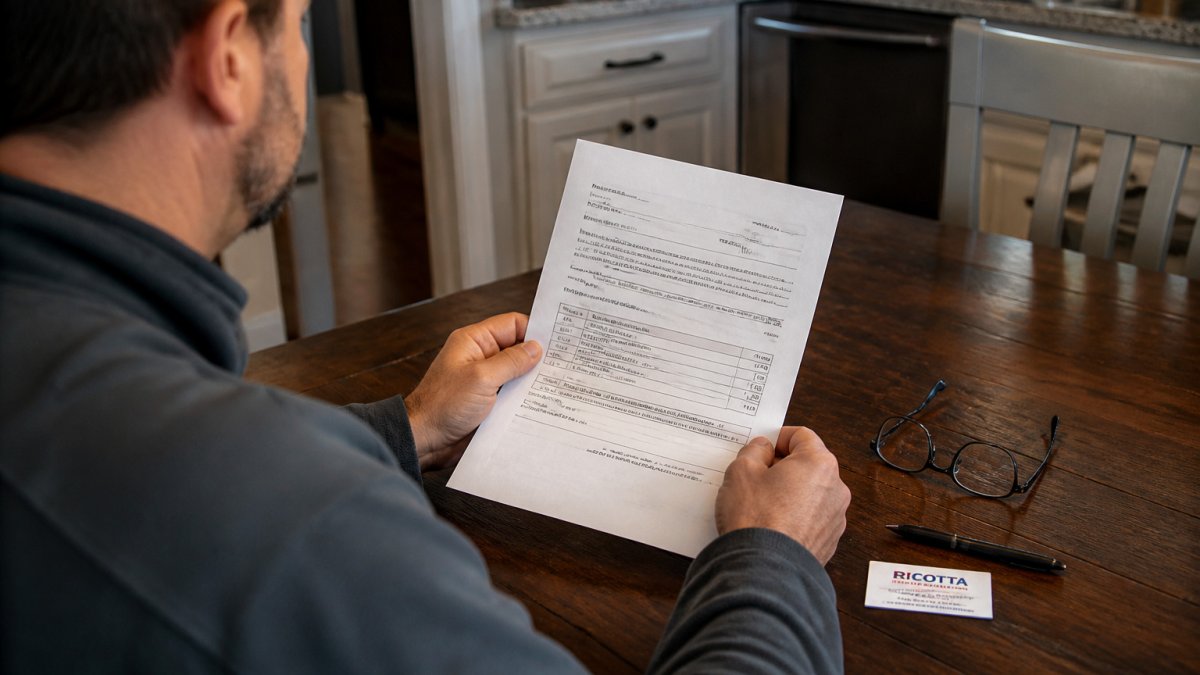
Line 1: Outdoor equipment. Confirm the heat pump's make, model, and capacity.
Line 2: Indoor equipment. Look for the air handler or furnace model and any proposed backup heat.
Line 3: Indoor coil. It may be included in the air handler or listed separately. Ask whether it is a manufacturer-approved match for the proposed system.
Line 4: Refrigerant line set. Confirm whether the lines will be replaced or reused, what length is included, and how the contractor will check compatibility and condition if reusing them.
Line 5: Thermostat. Ask for the make and model. Some equipment needs a specific control to use all its features; "programmable thermostat" alone doesn't tell you enough.
Line 6: Electrical disconnect and whip. These connect the outdoor unit to its electrical supply. Ask what electrical work is included and whether any panel or circuit changes are excluded.
Line 7: Labor and installation. Look for a clear installation scope and startup testing, such as checking airflow, refrigerant charge, and system operation according to the manufacturer's instructions.
Line 8: Permits and inspections. Confirm the responsible jurisdiction, who handles the paperwork, and whether required fees are included.
Line 9: Removal and disposal. Confirm that the old equipment will be removed and that refrigerant recovery is included where applicable.
Line 10: Written coverage terms. Ask for any manufacturer parts coverage and contractor labor coverage separately. Check exclusions, registration requirements, and who handles service claims.
Exclusions. Look for drain repairs, equipment pads, duct sealing, drywall repair, and any required HOA or historic-district approvals. An excluded item may still be necessary to finish the job.
Print the quote and mark anything you can't explain in plain language. Those are the questions to ask before signing.
A single installed price isn't necessarily a problem. A vague scope is. Ask for enough written detail to compare equipment, materials, labor, and required fees.
How to Compare HVAC Quotes Side by Side
Two bids can look far apart because one includes duct repairs and the other doesn't. Compare the work first, then the total. A simple worksheet makes those differences easier to spot.
Using a Simple Quote-Comparison Worksheet
Use a column for each contractor and a row for each item. Fill in the details from the written proposals. Mark anything not addressed as "not specified" and ask for clarification.
| Item to compare | Contractor A | Contractor B | Contractor C |
|---|---|---|---|
| Outdoor unit make and model | |||
| Indoor unit make and model | |||
| Applicable SEER2 and AFUE ratings | |||
| System capacity and load calculation | |||
| Line set: new or reused, length included | |||
| Thermostat model | |||
| Ductwork included | |||
| Permit and inspection fees | |||
| Removal and refrigerant recovery | |||
| Startup testing described | |||
| Written parts coverage terms | |||
| Written labor coverage terms | |||
| Exclusions listed | |||
| Any incentives assumed in the total | |||
| Deposit and payment schedule | |||
| Written change-order process | |||
| Total quoted price |
DOE guidance on home heating and cooling
Contract Terms, Payment Schedules, and Change Orders
The contract should explain what happens if the work changes, equipment is delayed, or you need to cancel.
- Deposit: Confirm how much is due and when. Be cautious about paying the full balance before installation begins.
- Milestones: If payments are tied to stages of the job, those stages should be clearly defined, such as equipment installation, startup, or required inspection.
- Change orders: Added work should have a written description, price, and your approval before it begins.
- Cancellation and delays: Check cancellation terms, deposit refunds, and what happens if equipment has already been ordered or delivery is delayed.
- Rebates and tax credits: If incentives appear in the proposal, ask whether they reduce the amount you pay the contractor or must be claimed separately. Verify availability, eligibility, and timing with the program administrator or a tax professional.
Compare the scope, contract terms, and total together. The lowest bid may not be the best value if it leaves out necessary work.
What to Do When Quotes Differ Substantially
Ask each contractor to explain the equipment choice and installation scope. A lower bid may exclude needed work; a higher one may include upgrades you didn't request. Neither price alone tells you whether the system fits your home.
If proposed equipment sizes differ, ask to see the load calculations and the assumptions behind them. Don't assume bigger is better.
Load Calculations, Exclusions, and Contract Terms to Verify
Before signing, revisit three areas: sizing, exclusions, and contract terms. These are easy to overlook when you're focused on equipment features.
Sizing should be based on your home's heating and cooling needs, using a method such as Manual J. Missouri's humid summers and cold winters make both cooling and heating performance worth discussing. An oversized cooling system can cycle too briefly to remove moisture effectively, while undersized equipment may struggle during extreme weather. Ask whether the calculation reflects your home's current insulation, windows, and layout. If you're still deciding whether to replace your system, read about signs your AC system needs replacing in nearby Mehlville, in St. Louis County.
For each exclusion, ask whether the work is needed, who will handle it, and how it will be priced. "Not included" doesn't mean "not necessary."
Check the deposit, payment schedule, and change-order process. Any change to the agreed scope should be documented and approved before the added work starts.
If financing or incentives are discussed, request the terms separately. Don't rely on a projected incentive until you've verified that you and the equipment qualify.
Questions to Ask HVAC Contractors Before You Sign
Use these questions to clear up anything the proposal leaves unanswered:
- Which equipment makes and models do you recommend, and why?
- How did you size the system, and can I see the load calculation?
- Which required permits and inspections are included?
- What written parts and labor coverage applies, and what does it exclude?
- What work is excluded from this quote?
- When are payments due, and how are change orders approved?
- Who will perform the work, and do they meet applicable local licensing requirements?
Ask for answers in writing so they become part of the proposal. If the scope or sizing still isn't clear, get another opinion before committing.
Requesting an Estimate From Ricotta Heating & Air
Ricotta Heating & Air is a family-owned company based in Hillsboro, serving Jefferson County and South St. Louis County. When you're ready to discuss replacement, request an HVAC replacement estimate. Bring your questions about equipment, sizing, and exclusions so you can review the proposed work before making a decision.
Frequently Asked Questions
What should be included in an HVAC quote?
Look for equipment makes and model numbers, capacity, installation scope, labor and materials, required permits and inspections, written coverage terms, and exclusions. The quote should also state the total and payment schedule. If it gives only a total, ask for a detailed scope before comparing bids.
How do I compare HVAC quotes from different contractors?
Compare equipment capacity, efficiency, included work, and exclusions first. Then review permits, coverage terms, payments, and the total. If equipment sizes differ, ask each contractor to explain the load calculation. A worksheet helps you spot differences without relying on price alone.
Should an HVAC quote include equipment model numbers?
Yes. Model numbers let you check the proposed equipment's capacity and efficiency and review the manufacturer's coverage terms. For cooling equipment, confirm the rating for the matched indoor and outdoor components. A label such as "high-efficiency system" isn't enough to verify what you're buying.
What questions should I ask before accepting an HVAC quote?
Ask what's included and excluded, how the equipment was sized, who handles required permits, and what written parts and labor coverage applies. Confirm payment dates and how added work must be approved. Get those answers in writing before signing.

This article was written with AI assistance and edited for Mehlville and St. Louis County homeowners by Ricotta Heating & Air. For advice about your own system, call (314) 333-5900.