
10 to 15 Years or 20+? Heat Pump Lifespan for St. Louis Homeowners
Most heat pumps last 10 to 15 years, with quality units that get proper installation and regular maintenance often reaching 20 years or more. Geothermal systems can run past 20 years since their underground components face less wear. The single biggest factor isn’t the brand you buy. It’s how the system was installed and how well it’s been cared for since.
TL;DR:
- Proper installation and regular maintenance can extend a heat pump’s lifespan well beyond the typical 10 to 15 years, especially with quality systems.
- Correct sizing through a Manual J calculation and consistent professional tune-ups are the most controllable factors influencing how long a system lasts.
- Ductless mini-splits and geothermal systems generally have longer operational lives, with some mini-splits reaching up to 30 years and geothermal systems often lasting over 20 years.
- Signs of aging include rising energy bills, frequent costly repairs, uneven temperatures, unusual noises, and refrigerant issues, especially after 10 years.
- Prioritize quality installation, proper sizing, and twice-annual professional maintenance to maximize your heat pump’s lifespan and delay replacement costs.
Table of Contents
- Heat Pump Lifespan by Type: What to Expect
- What Actually Determines How Long Your System Lasts
- Signs Your Heat Pump Is Reaching the End
- How to Extend Your Heat Pump’s Life
- Repair or Replace? A Simple Framework
- What We Look For at Ricotta
- Our Take: Stop Treating the “10 to 15 Year” Number as Gospel
- Ready for an Honest Assessment of Your System?
- Sources
Heat Pump Lifespan by Type: What to Expect
The number you should have in your head depends on what kind of heat pump sits outside your home. Not every system ages the same way, and the spread is bigger than most homeowners realize.
Air-source and central heat pumps are the most common setup in the St. Louis area, and they typically run 10 to 15 years, with DOE modeling commonly using a 14 to 15 year useful life for planning purposes. Ductless mini-splits show the widest range of any category, anywhere from 10 to 30 years, because their lifespan depends heavily on how many zones you’re running and how well the units were sized. Geothermal (ground-source) systems typically outlast both, often exceeding 20 years, since the ground loop that does most of the work sits buried and isn’t exposed to weather cycling.
One important wrinkle: a 2023 field study of residential HVAC equipment found median heat pump service life estimates closer to 23 years in sampled data, with 93% of sampled units still operable. That’s notably higher than older 15 year assumptions, and it suggests modern equipment paired with decent upkeep can outperform the textbook number.
- Air-source/central: 10 to 15 years (up to 20 with strong maintenance)
- Ductless mini-split: 10 to 30 years, highly installation-dependent
- Geothermal: 20+ years, thanks to protected underground components
Think of these as medians, not ceilings. A poorly installed unit can fail at year 8. A well-installed one can coast well past 15.
What Actually Determines How Long Your System Lasts
Here’s the part most articles skip: two identical heat pumps, installed on the same street, can have wildly different lifespans depending on a handful of controllable factors.
- Correct sizing at installation. A Manual J load calculation measures your home’s actual heating and cooling needs before a contractor picks equipment size. Skip it, and you often end up with an oversized unit that short-cycles, meaning it kicks on, satisfies the thermostat too fast, and shuts off again in rapid bursts. That repeated stress on the compressor can shrink expected life to as little as 8 to 10 years.
- Maintenance frequency. Systems that get professional tune-ups on schedule wear more slowly than systems that don’t, full stop.
- Runtime and climate. Unlike a furnace that only works in winter, a heat pump runs year-round, heating in the cold months and cooling in the summer. That means it logs more mechanical hours per year than single-season equipment, so buyers should plan for that heavier duty cycle when choosing a system.
- Component quality and warranty length. A manufacturer that backs a compressor for 10 years is telling you something about how long it expects that part to hold up. Shorter warranties are often a quiet signal of thinner-margin components.
- Ductwork and airflow issues. Leaky ducts, dirty coils, and restricted airflow all force the system to work harder than it should, and that extra strain adds up over years.
Pro Tip: Ask any contractor quoting a new system whether they perform a Manual J calculation as standard practice, not an upsell. If the answer is “we just match your old unit’s size,” that’s a red flag, not a shortcut.
None of these factors act alone. A slightly oversized unit that gets faithful maintenance might still hit 15 years. A perfectly sized system that never gets serviced can fall short of that.
Signs Your Heat Pump Is Reaching the End
Your system usually tells you it’s struggling before it fails outright. The trick is catching the pattern instead of writing off each symptom as a one-time fluke.
- Energy bills creeping up without any change in how you’re using the system is a classic efficiency loss signal that often points to aging components working harder to deliver the same comfort.
- Repairs getting more frequent and more expensive, especially once the unit passes the 10-year mark, since compressor and coil failures are among the costliest fixes in HVAC.
- Uneven temperatures room to room, or the system running longer cycles than it used to without actually catching up to the thermostat setting.
- Unusual noise, including rattling, buzzing, or grinding, can point to lose components or a system under more mechanical strain than it was built to handle.
- Refrigerant type concerns. Older systems using phased-out refrigerants can face rising repair costs simply because parts and refrigerant supply are shrinking.
If your unit is past the 10 to 15 year window and showing two or more of these signs at once, that’s usually your cue to start budgeting for replacement rather than sinking more money into repairs.
How to Extend Your Heat Pump’s Life
Maintenance is the one lever almost every homeowner can pull, and it’s the most significant variable you actually control after the installation is done. Here’s what a solid plan looks like.
- Schedule professional service at least once a year, ideally twice, once before heating season and once before cooling season, so a technician catches issues specific to each mode of operation.
- Change or clean your filter every 1 to 3 months. A clogged filter forces your system to breathe through a pillow, restricting airflow and making every component work harder than it needs to.
- Keep the outdoor unit clear of leaves, grass clippings, and snow buildup. Give it at least a couple feet of clearance on all sides.
- Watch for ice buildup on the outdoor coil in winter, which can signal a defrost cycle problem worth calling in a professional to check.
- Consider a maintenance plan if you’d rather not track the calendar yourself. A service agreement locks in the twice-yearly visits and typically catches small problems before they become expensive ones.
During a professional visit, a technician should check refrigerant charge, test electrical connections, lubricate moving parts, clean the coils, run an airflow test, and inspect your ductwork for leaks or blockages. That’s a lot more thorough than swapping a filter, and it’s exactly the kind of preventative work that avoids the high-cost failures like a blown compressor.
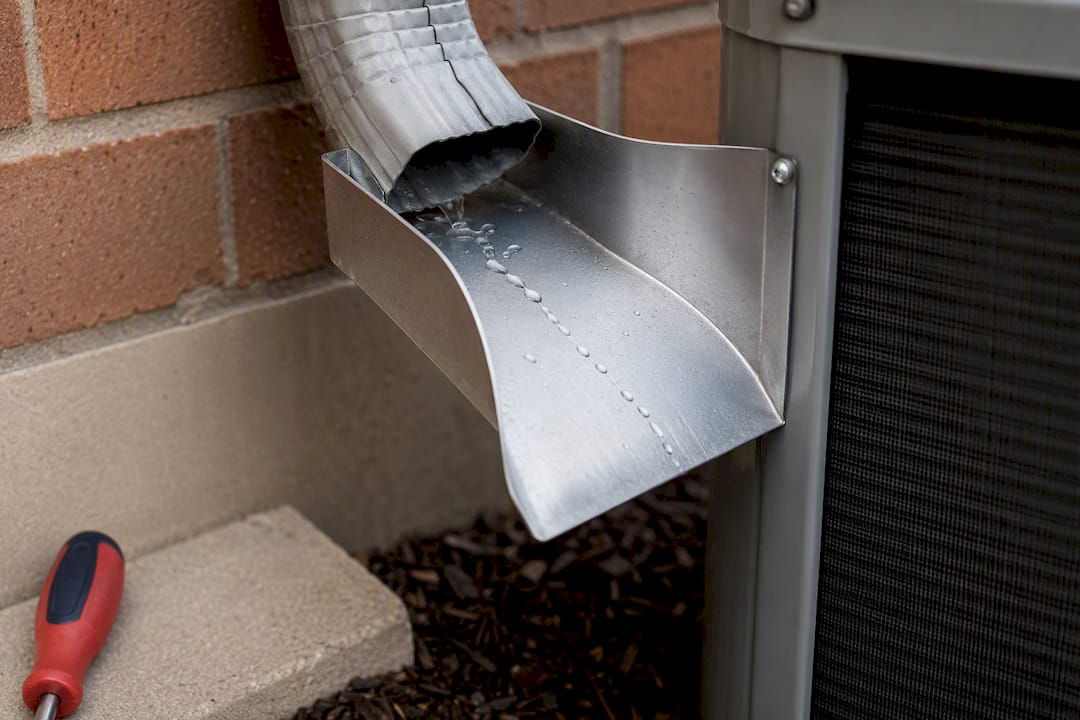
Pro Tip: If your outdoor unit sits under a gutter with no diverter, ask your technician about it during your next visit. Constant water dripping onto the coil accelerates corrosion in ways most homeowners never connect to their energy bill.
DIY is fine for filter changes and basic debris clearance. Refrigerant handling, electrical work, and anything involving the sealed system should go to a licensed technician, both because it’s often required by law and because DIY attempts on those components can void your warranty.
Repair or Replace? A Simple Framework
But that rule needs context, not blind application.
Factor in operating costs too. An older heat pump running at a lower SEER or HSPF rating can cost meaningfully more to run every month than a modern replacement, even before you account for the repair bill. Federal incentives tied to the Inflation Reduction Act can also offset upgrade costs, which shifts the math further toward replacing rather than patching an aging system.
Before you commit to a new unit, ask your contractor:
- Will you perform a Manual J load calculation, or are you sizing based on my existing equipment?
- What’s the expected runtime and duty cycle for this specific model in our climate?
- What does the warranty cover, and for how long?
- How available are parts for this system if something needs repair in year 8 or 12?
- What’s the realistic-projected lifespan for this unit given proper maintenance?
A contractor who can’t answer those clearly is a contractor you should keep shopping past.
What We Look For at Ricotta
We’ve been servicing heating and cooling systems in the St. Louis and Jefferson County area for 50 years, and if there’s one thing that pattern teaches you, it’s that two heat pumps of the same age can be in completely different shape depending on their history.
When we evaluate a heat pump, we check:
- Whether the original installation matched a proper Manual J calculation for the home
- Refrigerant levels and whether they’ve drifted from spec
- Compressor health and signs of excess wear
- Duct leakage that’s forcing the system to overwork
- Thermostat calibration, since a miscalibrated thermostat can mask bigger problems
Sometimes that inspection turns into a straightforward repair. Other times we’re honest that a 13-year-old unit with a failing compressor and outdated refrigerant is throwing good money after bad. Our heat pump service page walks through what an inspection covers if you want to see where your system stands before winter or summer hits hard.
Our Take: Stop Treating the “10 to 15 Year” Number as Gospel
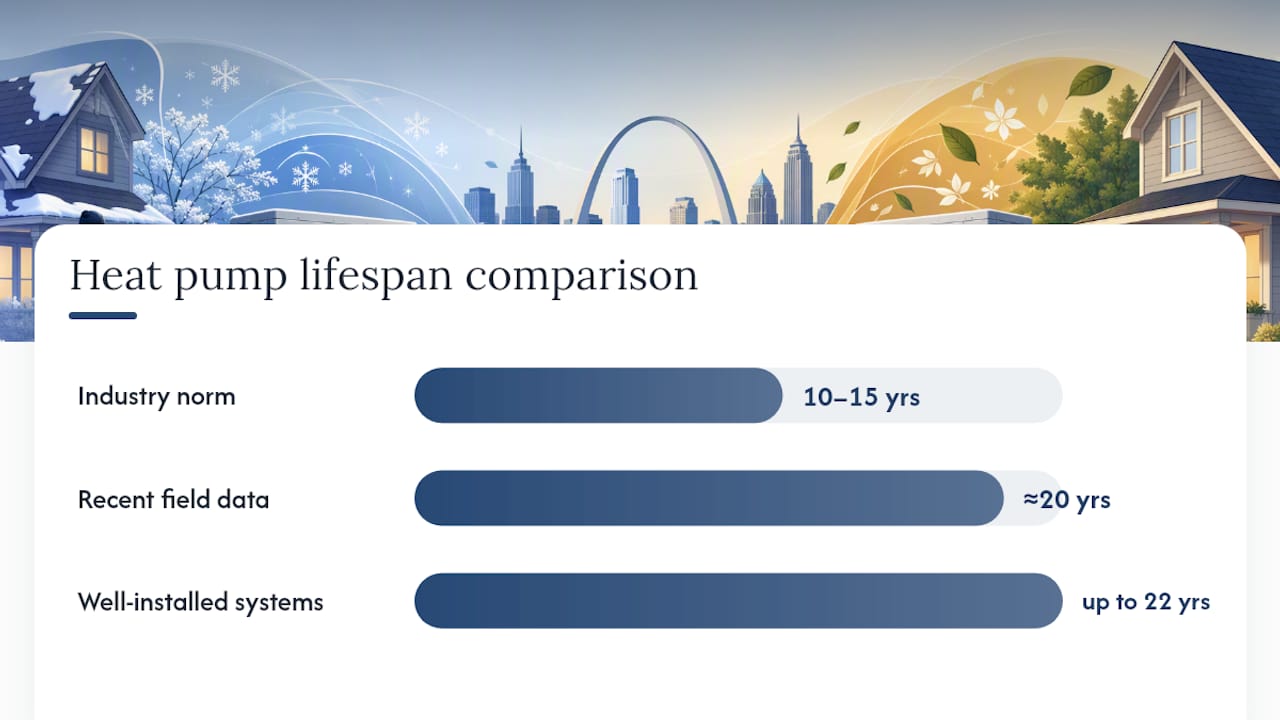
The industry-standard 10 to 15 year figure is a useful starting point, not a countdown timer. Recent field data suggests well-installed, well-maintained systems are increasingly landing closer to 20 years, and that gap between the old assumption and the newer evidence matters for how you plan your budget.
Where conventional advice falls short is treating every heat pump like it’s on the same clock. A unit installed without a Manual J calculation is playing a different game than one that was sized correctly from day one, and no maintenance plan fully makes up for a bad start.
If you take one thing from this guide, prioritize the installation quality question before you ever ask about brand or price. Ask what sizing method a contractor used, check the warranty length as a proxy for how much confidence the manufacturer has in its own parts, and then commit to the twice-yearly service habit. That combination, not the sticker on the unit, is what decides whether you’re replacing your system at year 10 or year 22.
— Alan
Ready for an Honest Assessment of Your System?
If your heat pump is showing its age, or you’re just not sure where it stands, guessing isn’t a strategy. A well-established local company has spent decades diagnosing HVAC systems in the St. Louis and Jefferson County area, focusing on honest assessments without pushing unnecessary replacements. That’s the difference between a company selling you a new unit and one telling you the truth about the one you already have.

This approach is supported by positive customer feedback from homeowners who valued honest answers alongside their HVAC services. Whether you need a straightforward repair, a full replacement evaluation, or want to lock in twice-yearly service through a maintenance plan, our technicians will walk you through exactly what your system needs and why. If you’re in Mehlville or nearby and your heat pump is past the 10-year mark, schedule an inspection and get a clear answer instead of a guess.
Sources
- How Long Do Heat Pumps Last? | Carrier Residential
- Replace your heating and cooling equipment | ENERGY STAR
- CPUC Group A 2023 Residential HVAC and DHW EUL Study (Calmac / DNV)
- How long do heat pumps last? | EnergySage