
Why Your AC Keeps Tripping the Breaker: A Guide for High Ridge, MO Homeowners
There’s nothing more frustrating than your air conditioner quitting during a sweltering Missouri summer day. When the AC stops, your first instinct might be to check the circuit breaker. If you find it tripped, you can flip it back—but if it happens again, you’ve got a bigger issue. A constantly AC tripping breaker in your High Ridge, MO home is more than an annoyance; it’s a critical warning sign that your system is overloaded or has a fault. Ignoring it can lead to more significant damage. Let’s walk through the likely causes, from simple DIY checks to serious electrical problems.
First Things First: Simple Checks Before You Call a Pro
Before you panic, let's cover the basics. Sometimes, an overloaded circuit is caused by something simple you can fix yourself in just a few minutes. Here's what to check first:
- The Breaker Itself: Go to your electrical panel. Is the breaker for the AC hot to the touch? Do you notice any signs of scorching? While you can reset a tripped breaker once, you should never repeatedly flip it back on. If it trips again immediately or within a few minutes, there's an underlying problem. Sometimes, especially in older High Ridge homes, the breaker itself can weaken and fail, tripping even when the AC is drawing normal power. But don't assume this is the case without ruling out other causes.
- Your Air Filter: This is the #1 most common culprit. A-clogged air filter is like trying to breathe through a thick blanket. It severely restricts airflow to your indoor unit (the air handler). When this happens, the blower motor has to run much harder and longer to pull air through, causing it to overheat and draw more electricity than the circuit is designed for. Pop—the breaker trips. During our humid Jefferson County summers with high pollen and dust counts, you should be checking your filter monthly. If it's grey and caked with debris, replace it. It's a cheap and easy fix that solves a surprising number of AC issues.
Dirty Coils: An AC Tripping Breaker in High Ridge, MO Can Be an Airflow Issue
If the filter is clean, the next thing to check is your outdoor unit, the condenser. This unit's job is to release all the heat it has pulled from your home's air. It does this through a set of delicate metal fins called condenser coils, with the help of a large fan.
Over time, these coils get clogged with dirt, dust, lawn clippings, and the dreaded cottonwood fluff we see all over Jefferson County. When the coils are blanketed in grime, they can't release heat effectively. This forces the compressor—the heart of your AC—and the condenser fan motor to work overtime in the oppressive heat. This intense effort draws a massive amount of electrical current, often exceeding the breaker's limit.
What you can do:
- Turn off the power: First and foremost, turn off the power to the outdoor unit at both the breaker panel and the outdoor disconnect switch (a metal box usually mounted to the house near the unit).
- Gently rinse the coils: Using a standard garden hose with a spray nozzle, gently rinse the coils from the top down. Use a gentle spray, not a high-pressure washer, as that can easily bend the delicate fins.
- Clear the area: Ensure there's at least two feet of clearance around the entire unit for proper airflow.
While a gentle rinse can help, years of caked-on grime might require a professional chemical cleaning. For a thorough job and to ensure your system is ready for the next heatwave, trust a local pro. As your High Ridge HVAC experts, we have the right tools and cleaning agents to do it safely.
Electrical Problems: When the Issue Goes Beyond Dirt and Grime
If your filters and coils are clean but the breaker keeps tripping, the problem is likely electrical. These issues are more serious and absolutely require a trained technician. Please do not attempt to diagnose or repair these yourself; working with high-voltage components is extremely dangerous.
Common electrical faults include:
Failing Capacitors: Your AC has several capacitors, which act like small batteries to give the motors the boost they need to start and run efficiently. When a
startorruncapacitor is weak or has failed, the motor will struggle to turn over, causing it to draw a huge spike in amperage. You might hear a humming or buzzing sound from the unit before the breaker trips. This is a common failure point, especially in older units baking in the Missouri sun.Wiring Issues: Wires can degrade over time. The insulation can become brittle and crack, or rodents might chew through them. A loose connection or a frayed wire can cause a short circuit—where a hot wire touches a ground wire—creating a sudden, massive power surge that instantly trips the breaker. This is a significant fire hazard.
A Bad Contactor: The contactor is an electrical switch that controls the flow of power to the outdoor unit. If its contacts get pitted or welded shut, it can cause the compressor and fan motor to run erratically or attempt to start under load, leading to a trip.
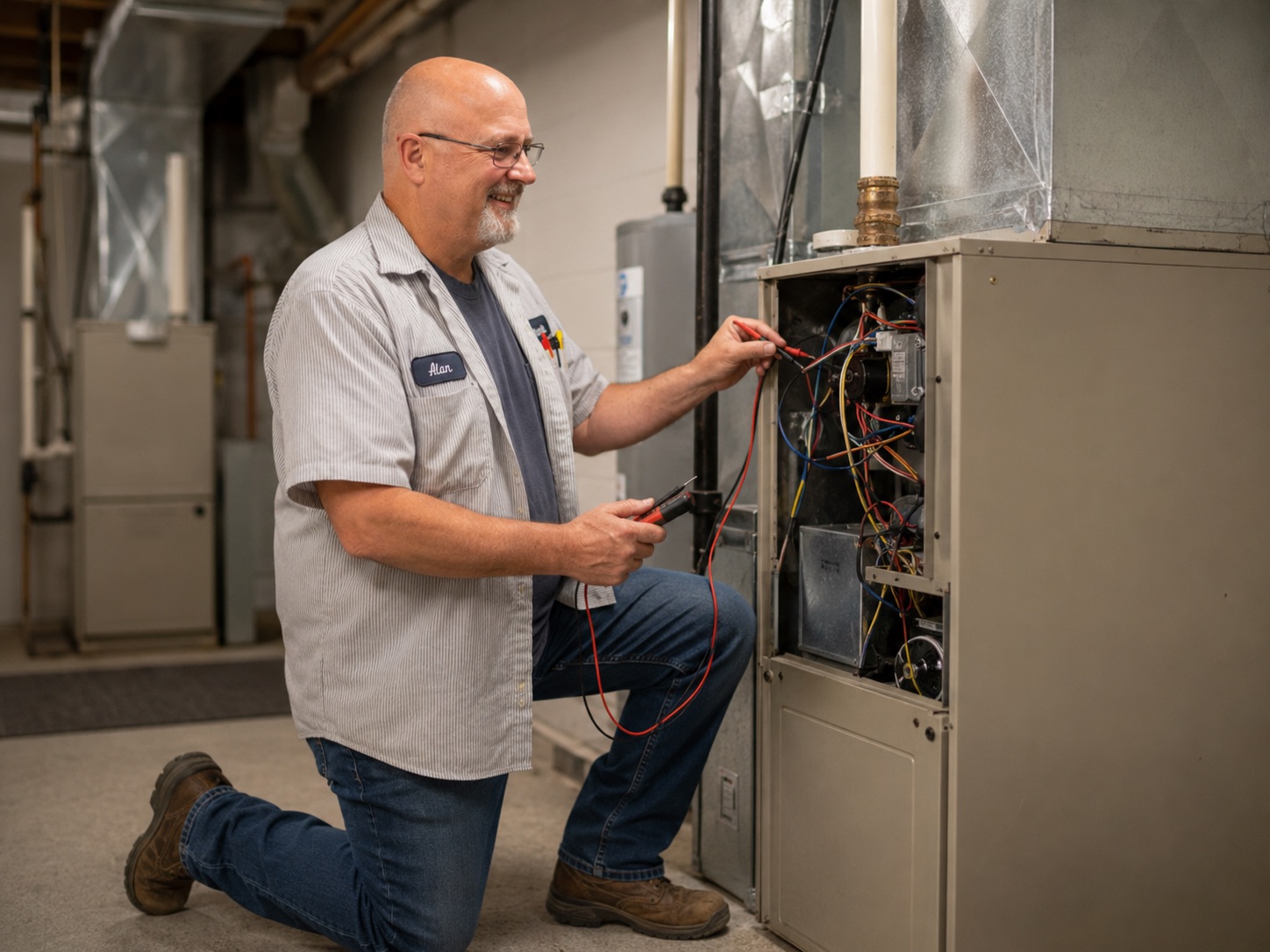
Diagnosing these issues requires specialized tools like multimeters. If you suspect an electrical problem, your next step should be to call a licensed HVAC technician at (314) 333-5900.
Major Component Failure: The Compressor and Fan Motor
This is the category of problems no homeowner wants to hear, but it's often the cause of a persistently tripping breaker, especially in an aging system. The two main culprits are the compressor and the condenser fan motor.
The Compressor: The compressor is the most vital and expensive component in your air conditioner. It's a pump that circulates refrigerant throughout the system. Over time, especially after years of battling 95°+ High Ridge heatwaves, a compressor can wear out and seize up. When it tries to start but can't, it draws what's called "locked-rotor amps," an enormous electrical current that will trip the breaker immediately to prevent a fire. Often, a failing compressor will make a loud clanking or grinding noise on startup before everything goes silent.
Another critical compressor failure is a "short to ground." This means the electrical windings inside the compressor have broken down and are touching the metal casing. This creates a direct path for electricity to go to ground, causing an instant breaker trip. This is a fatal condition for the compressor and requires a full replacement.
The Condenser Fan Motor: The large fan in your outdoor unit has its own motor. If this motor's bearings are shot or if it overheats and seizes, it will also draw excess current and trip the breaker. Sometimes the unit will run for a few minutes, the compressor will get dangerously hot because the fan isn't running, and then the breaker will trip.
When you're facing a major component failure, it's often a sign that the system is near the end of its life. If your AC is over 10-12 years old, replacing the entire unit might be more cost-effective than a very expensive repair like a compressor replacement. This is a situation that requires immediate attention; call for emergency air conditioning repair to get a professional diagnosis.
The Right Fix: Troubleshooting an AC Tripping Breaker in High Ridge, MO
So, we've walked through the possibilities, from a simple $5 air filter to a multi-thousand-dollar compressor failure. The key takeaway is that a tripping breaker is your AC's way of screaming for help. While checking the filter and rinsing the coils are great first steps for any homeowner, anything beyond that requires a professional touch for both safety and accuracy.
Guessing can be dangerous and expensive. You don't want to replace a breaker only to find out the real problem was a failing compressor that will just trip the new one. A qualified technician can use a tool called a megohmmeter to test if a compressor is shorted to ground, check the microfarad readings on capacitors to see if they're weak, and inspect for loose or burnt wiring inside the panels.
At Ricotta Heating & Air, we've seen it all. As a family-owned company serving our neighbors across High Ridge and Jefferson County, we believe in honest diagnostics. We won't sell you a new unit if a simple capacitor replacement will do the job. If your AC is tripping the breaker in your High Ridge, MO home, don't keep resetting it. Shut the system down and give us a call. We’ll find the root cause of the problem and explain your options clearly so you can make an informed decision.
Your comfort and safety are our top priorities. For fast, reliable service, call Ricotta Heating & Air today at (314) 333-5900.
Need help in High Ridge, MO?
Ricotta Heating & Air has been serving Jefferson County homeowners for 50+ years. Same-day AC service calls.
Frequently Asked Questions
Is it OK to keep resetting the breaker for my AC?+
No. Resetting it once is fine for troubleshooting, but repeatedly flipping it back on is dangerous. The breaker is a safety device, and ignoring its warning can lead to component damage or even an electrical fire. Call a professional if it trips more than once.
How often should I change my air filter in High Ridge, MO?+
During peak summer and spring allergy seasons, you should check your filter monthly. A good rule of thumb is to replace it every 1-3 months, depending on if you have pets, allergies, or live near a dusty area. A clean filter is the cheapest insurance for your HVAC system.
Why does my AC only trip the breaker on very hot days?+
On the hottest Missouri days, your AC system is under maximum strain. This extra stress can expose an underlying weakness, like dirty condenser coils, a weak capacitor, or a worn-out compressor, that might not be apparent on a milder day. It's a clear sign that a component is struggling to keep up.
Could my old house's wiring be the problem?+
It's possible, especially in some of the older homes in the High Ridge area. Aging wiring, an undersized circuit, or a worn-out breaker in the panel can all contribute to the problem. A qualified electrician or HVAC technician can properly assess your home's electrical system.
How can I tell if my AC capacitor is bad?+
Common signs of a bad capacitor include a humming or buzzing noise from the outdoor unit when it tries to start, the fan motor struggling or failing to spin up, or the AC unit starting and then quickly shutting down. Visually, a failing capacitor might have a bulging or leaking top, but they often fail without any visible signs.
What's the average cost to fix an AC that keeps tripping the breaker?+
The cost varies dramatically depending on the cause. A new air filter is under $20. A professional coil cleaning or capacitor replacement might cost a few hundred dollars. However, a major repair like a compressor replacement can cost thousands, at which point replacing the unit may be a better investment.